
All about Legionnaire’s disease, its symptoms and treatments
Legionellosis is an infectious respiratory disease. It comes from a bacterium of the Legionella family.
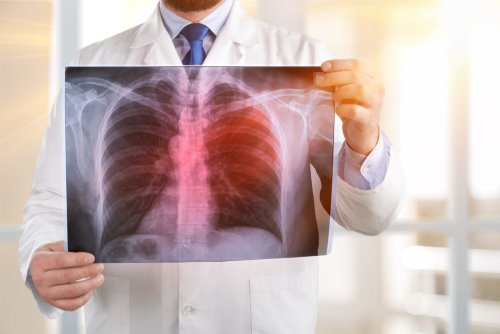
What is legionnaire’s disease?
Legionnaire’s disease, or legionellosis is an infectious respiratory disease. It comes from a bacterium of the Legionella family. It can take two clinical forms:
- A mild form, called Pontiac fever;
- A more severe, potentially fatal form, that attacks the respiratory tract and causes an acute lung infection: legionnaire's disease.
Due to the mild nature of Pontiac fever, only legionnaire's disease is developed in this article.
What are the symptoms of legionelosis ?

At first, the symptoms of legionellosis are similar to those of influenza: high fever, chills, dry cough, headache, nausea, and muscle pains called myalgia.
The incubation period ranges from 2 to 10 days, on average. In some rare cases, it can last up to 19 days.
The infection will then develop in the lungs and cause severe pneumonia.
Dry cough, dyspnea (or breathing difficulties), chest pain and sometimes low blood sputum are some of the lung symptoms encountered.
Beside these lung symptoms, fever exceeds 40°C and the general condition is considerably altered. Myalgia and headaches sharply increase.
Neurological disorders such as confusion, disorientation, hallucinations, lethargy, delirium or even coma can occur. These symptoms often come along with abdominal pain, diarrhea and vomiting
Is it a serious illness?
The severity of the illness depends on several factors:
- the virulence of the strain of bacteria,
- the duration of exposure to the source of contamination,
- the vulnerability of those affected.
These complications are often fatal.
The mortality rate of legionellosis is 10%.
For the most fragile hospitalized people, this figure can rise up to 50%.
La gravité de la maladie dépend de plusieurs facteurs :
- virulence de la souche de bactérie ;
- durée d’exposition à la source de contamination ;
- vulnérabilité des personnes atteintes.
Complications may occur such as irreversible respiratory failure, acute renal failure, kidney abscesses, infection of the endocardium (inner lining of the heart) and rhabdomyolysis (breakdown of skeletal muscle cells in the blood).
These complications are often fatal.
The mortality rate of legionellosis is 10%.
For the most fragile hospitalized people, this figure can rise up to 50%.
What are the after-effects?
In some cases, patients who have recovered may have neurological sequelae up to several weeks or even months after the disease.
More rarely, in cases of particularly severe conditions, legionnaire’s disease can leave irreversible brain damage and permanent disability.
Who’s at risk?

Some specific population will present a favorable breeding ground for the disease to develop.

Incidence rate by age and sex of legionellosis cases notified in France in 2018 (source : Santé Publique France)
Elderly people, infants, recently operated or transplanted patients, people already suffering from a chronic disease or anyone with a weakened immune system is considered a population at risk.
Men are nearly three times more affected than women.
The median age is 64 years.
Smoking, diabetes, cancer, immunosuppressive or corticosteroid treatments are all aggravating factors. In 2018, according to Santé Publique France, out of 2133 cases in France, 73% of people with legionellosis presented at least one of these factors. In 34% of cases, smoking was the only one.
How do you contract legionnaire's disease?

Legionella pneumophila infecting the lungs
Contamination occurs through inhalation of water aerosols, or mist, infested with Legionella bacteria.
The bacteria will then low down into the lung alveoli where they will multiply until they generate an infection.
Legionella bacteria are naturally present in the environment, in streams, lakes and rivers, or in the soil.
They proliferate in water with a temperature between 25 and 45°C.
This is why water systems are the main source of infection.
They are mainly found in the following facilities:

Legionella pneumophila
- domestic hot water: water heaters, showers, taps, etc.
- air conditioning systems and particularly air cooling towers (ACRs) in industrial or office buildings;
- whirlpools and spas;
- public and decorative fountains;
- misters and humidifiers;
- sewage treatment plants;
- certain medical equipment for dental cleaning or sleep apnea.
Is it contagious?
Legionnaire's disease is not a contagious disease. So far, according to Santé Publique France, there is only one recorded case of direct spreading between people. In the great majority of cases, the contamination is isolated or sporadic.
There is, however, an increasing number of outbreaks coming from a common source of contamination.
Which treatment?
Most people with legionellosis need to be hospitalized.
Treatment is with antibiotics (macrolides or fluoroquinolones) and usually lasts 8 to 14 days.
The prescription can last up to 21 days for the most vulnerable people.
In some cases, intravenous treatment is necessary. Healing is reached after several weeks, sometimes several months.
If diagnosed and treated early enough, the outcome is usually positive.
How is legionnaire's disease diagnosed?
After clinical examination of the symptoms and radiological confirmation of a pneumopathy, microbiological analysis is the only method to confirm the diagnosis. Several procedures exist:
- urine tests,
- blood tests,
- a culture of lung sputum samples.
This remains the most accurate and reliable method to identify the type of bacteria involved.
Is it a disease on the rise?
Cases of Legionnaire's disease have been on the rise since the 1980s, when the declaration of the disease became compulsory in some countries (1987 in France).
Between 2011 and 2018 the number of people affected has doubled in Europe.
For more information on the causes of this alarming increase, read our article on the distribution of cases in Europe.
A recent American study [1] shows that the underestimation factor for legionnaires' disease could be about 8 to 10 in the US.
In France, applying this underestimation factor would rise the number of infections up to 17,000 or 21,000 cases per year.
In Europe, we would speak of nearly 100,000 cases per year.
How to avoid legionnaire’s disease?

There is no vaccine or preventive treatment to protect people against Legionnaire's disease.
Proper maintenance of water systems remains the best way to limit the risk of contamination.
In order to avoid the proliferation of Legionella bacteria, it is recommended to :
- avoid stagnation of water and ensure its good circulation,
- to prevent the network from scaling and corrosion with an adapted maintenance according to the quality of the water and the type of installation involved;
- to monitor the temperature of the hot water network;
- to practice regular self-checks.
Running regular self-checking tests is the best way to prevent the risk and to react quickly in case of contamination.
Simple, fast and reliable solutions are now available. Innovative and economical, these tests can be carried out on site or at home, in full autonomy.
Diamidex offers turnkey solutions adapted to the needs of professionals who are subject to regulation, as well as private individuals wishing to control the legionella risk in their homes.
Sources :
[1] National Academies of Sciences, Engineering, and Medicine 2019. Management of Legionella in Water Systems. Washington, DC: The National Academies Press. https://doi.org/10.17226/25474
Read our Other Articles
Why is Legionnaires’ disease called by that name?
Why is Legionnaires’ disease called by that name? An American Legion convention forever etched in memory It was in July 1976, in the United States, that Legionnaires’ disease—also known as legionellosis— was precisely identified for the first time. That year, the...
Risk Management Strategy for Legionella in Domestic Hot Water
Risk Management Strategy for Legionella in Domestic Hot WaterTo prevent contamination by Legionella pneumophila in domestic hot water systems, regular testing, temperature control, and rapid-response strategies are essential. Here’s a practical and proactive...
Infectious risk posed by Legionella pneumophila outside of serogroup 1 in hospitals
Infectious risk posed by Legionella pneumophila outside of serogroup 1 in hospitalsDespite existing risk control policies and awareness by health authorities, the diagnosis of legionellosis is still far from systematic.Because hospitalized patients are particularly...
Addressing the Challenges of Bioburden in Medical Devices
Addressing the Challenges of Bioburden in Medical Devices Ensuring the safety and efficacy of medical devices is a critical concern for manufacturers and regulatory bodies. One of the primary challenges in this field is managing bioburden - the presence of...
Pontiac Fever, Symptoms, Diagnosis, and Treatments
Pontiac Fever, Symptoms, Diagnosis, and TreatmentsWhat is Pontiac fever? What is the difference between it and Legionnaire’s disease? Why is it called that? How does it manifest? And most importantly, how can it be avoided? C4Hydro revisits this illness. What is...
Pseudomonas, Cryptosporidium, Legionella… What Germs Should You Worry About in Pools and Spas?
Pseudomonas, Cryptosporidium, Legionella… What Germs Should You Worry About in Pools and Spas?The main diseases contracted in pools and spas are caused by about ten pathogenic organisms, including Cryptosporidium, Pseudomonas, Shigella, Legionella, Norovirus, and...