
Infectious risk posed by Legionella pneumophila outside of serogroup 1 in hospitals
Despite existing risk control policies and awareness by health authorities, the diagnosis of legionellosis is still far from systematic.

Because hospitalized patients are particularly fragile, the fatality rate when the disease is contracted in this setting can reach 40 to 80% in an untreated immunocompromised patient.[1] Added to this danger is the constraint of waiting about ten days to obtain a definitive diagnosis. Moreover, the distribution by serogroup is very specific.
Which serogroups are the most virulent?
Legionella is a pathogenic bacillus comprising 49 species. Among these, Legionella pneumophila is implicated in most human infections.
This species itself is divided into 16 serogroups.
Worldwide, serogroups 1, 4, and 6 are the most virulent.
However, this proportion varies depending on:
- Geographic location
- Types of facilities
- The exposed population
For example, a 2002 study[2] based on 1,335 cases of legionellosis caused by Legionella pneumophila in Europe showed that 36% of hospital-acquired legionellosis in European hospitals involved L. pneumophila outside serogroup 1.
This percentage varies around the world and can, for instance, reach 71% in Denmark, Finland, and Sweden.
Testing for nosocomial legionellosis cannot be limited to a urinary test
The search for a soluble urinary antigen is a perfectly reliable method if patients are infected by serogroup 1 legionella.
However, according to a 2017 study[3], testing by this method fails in 20 to 50% of cases, owing to the involvement of non–serogroup 1 legionella in nosocomial legionellosis.
In the event of an infection in this kind of environment, it is therefore essential to perform a pulmonary sample from patients and follow up with Petri dish culture testing.
Given the delay in obtaining a laboratory diagnosis, prevention remains the best strategy
Laboratory culture testing is much longer and more complex than urinary tests. The waiting period of more than 10 days for a reliable legionellosis diagnosis delays action.
The best way to protect patients is to address the problem at its source—particularly by reducing the risk of contamination in water systems by legionella, so that the bacteria cannot infect humans.
It is thus essential to carry out preventive testing as regularly as possible. One must search for all legionella serogroups. Samples are collected at the most representative and high-risk points in the water system.
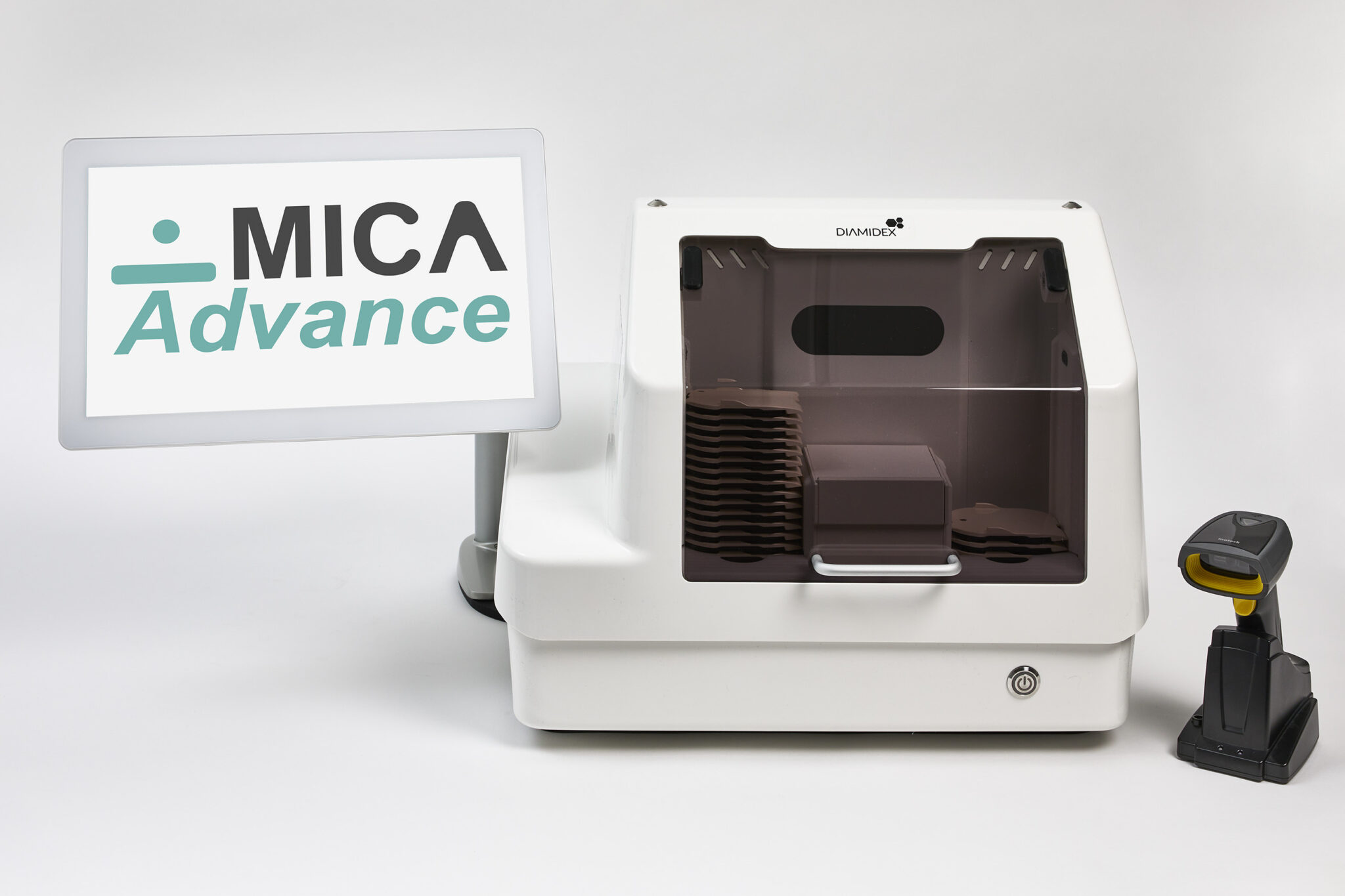
Our Solution : MICA Advance Legionella
MICA Advance Legionella supports proactive and efficient Legionella management strategies, delivering fast, accurate, and reliable results.
Its advantages include:
- Rapid detection capabilities: Results within 48 hours, enabling swift responses to contamination risks and significantly reducing exposure windows.
- Ease of use: Requires minimal expertise, no confirmatory tests, and only 1 GVPC plate per analysis.
- Reliable accuracy: A cultural method that detects Legionella pneumophila serogroups with thresholds of 1,000 CFU/L (48 hours), meeting AOAC certification standards.
Read our Other Articles
Before the School Year: Remember to Detect Legionella in Boarding School and Gym Showers
Before the School Year: Remember to Detect Legionella in Boarding School and Gym ShowersIn recent months, numerous episodes of Legionella contamination have been reported by the media. Recently, a new building at 1325 Jerome Ave., which houses a Bronx charter school...
Optimizing Domestic Hot Water energy consumption
Optimizing Domestic Hot Water energy consumptionThe risk of reducing the temperature of domestic water heatersIn an age when environmental concerns take center stage, the relentless quest for energy savings is leading more and more households to explore innovative...
What is Total Viable Count ?
What is Total Viable Count ? Total Viable Count Testing is a vast notion that is used in many industries at many levels and that is at the core of industrial quality control.Total Viable Count testing is a process of quality control which permits to measure the total...