
Why is Legionnaires’ disease called by that name?
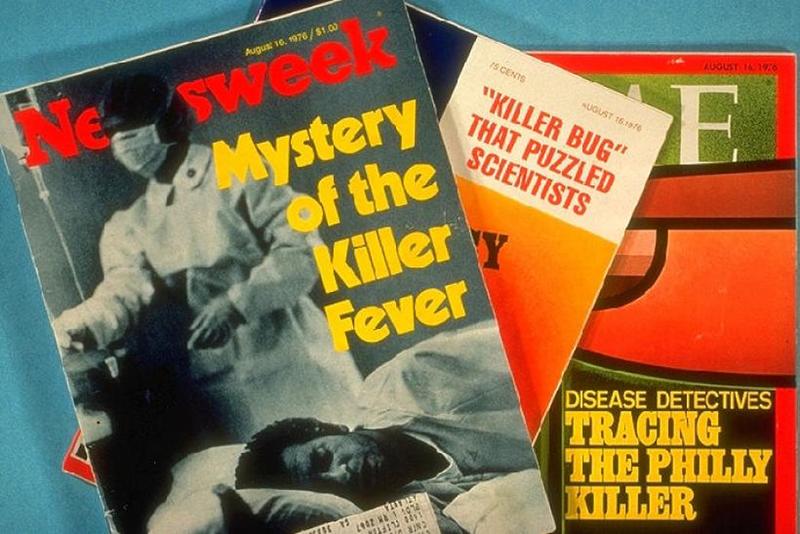
An American Legion convention forever etched in memory
It was in July 1976, in the United States, that Legionnaires’ disease—also known as legionellosis— was precisely identified for the first time. That year, the 58th American Legion Convention was held in Philadelphia. The celebrations took place at the Bellevue-Stratford Hotel, a prestigious downtown establishment, and lasted three days. Nearly 2,000 war veterans attended.
This event was also intended to celebrate the bicentennial of the United States Declaration of Independence—certainly a historic date. But this is not how History would remember the occasion.
Indeed, a week after the festivities ended, several veterans began showing more or less alarming symptoms of pneumopathy: headaches, high fever, digestive problems, respiratory difficulties and pain, delirium, coma. Among the 2,000 legionnaires in attendance, 182 were infected: 147 were hospitalized and 29 died.
The largest medical investigation in U.S. history
What followed was the largest medical investigation of the 20th century in the United States. Covered extensively by the media, the hunt made the front pages of magazines such as Time, which referred to the “Philly Killer.” Was it bioterrorism? The KGB? A criminal act or some microorganism? No lead was dismissed.
It wasn’t until January 1977—six months after the events—that scientists from the Centers for Disease Control and Prevention (CDC) succeeded in isolating the responsible pathogenic bacterium. They named it Legionella pneumophila in honor of the veterans, and the disease would become known worldwide as Legionnaires’ disease.
Legionella pneumophila is thus a particularly virulent bacterial strain from the Legionella family. They thrive in water systems, and cooling towers in air conditioning units provide an ideal environment for them to grow. It was precisely through the air-conditioning system of the Bellevue-Stratford Hotel that the contamination spread.
Ultimately, the hotel closed its doors in the following months. A health regulation regarding the maintenance of water systems and cooling towers was quickly adopted. In retrospect, several mysterious epidemics were identified as cases of Legionnaires’ disease or Pontiac fever, a milder form of the illness.
Legionella: a bacterium that still persists today
Today, cases of legionellosis are on the rise. They increase by an average of 5% every year. There is no vaccine or preventive treatment for the disease, and the best way to protect against infection and prevent the bacteria from spreading remains the proper maintenance of water systems.
Read our Other Articles
Managing Installations in Data Centers : the Hidden Risk of Legionella
Managing Installations in Data Centers : the Hidden Risk of Legionella Data centers are the keystone of all digital activities and their role keeps growing with each new mail sent and picture saved. However, awareness of their less well-known impact on health is...
Legionella Risk Management in Healthcare Facilities
Legionella Risk Management in Healthcare FacilitiesHospitals, retirement homes and clinics serve vulnerable populations, highly exposed to the most severe form of Legionnaires’ disease. As a result, health facilities are subject to stricter controls than other types...